Every June, a new batch walks into a medical college bookshop in Chhatrapati Sambhajinagar
(or Nashik, or Nagpur, or Mumbai) and gets handed a list of twenty books. They buy all of them.
By October, half are still shrink-wrapped and the other half are covered in highlighter with no
idea which one to actually read before the first internal assessment.
I’m a final-year MBBS student at Government Medical College, Chhatrapati Sambhajinagar
(Aurangabad). This is the first-year book list I wish someone had given me — one main
textbook, one companion, one practical per subject, plus the honest note on what
not to buy yet.
The one rule that saves your first year
Beginners try to read three textbooks per subject. The people who top the university exams
usually read one textbook properly, twice, with a review book for revision.
Pick your primary book in the first month and do not switch mid-year — flipping between books
is the single biggest reason students feel like they’re “studying but not remembering”.
First year MBBS subjects (NMC CBME framework)
Under the current competency-based curriculum, your first professional year is built around:
- Anatomy — gross anatomy, histology, embryology, osteology, neuroanatomy basics
- Physiology — general, systemic and practical physiology
- Biochemistry — biomolecules, metabolism, molecular biology, clinical biochemistry
- Foundation Course (2 weeks at the start) and AETCOM — ethics and communication
- Early Clinical Exposure (ECE) — shadowing and case-linked learning
Your affiliating university (MUHS in Maharashtra) sets the exact paper pattern. Always confirm
the current mark distribution and practical scheme on your college noticeboard before you plan.
Subject-wise first year MBBS books
Anatomy
- Main textbook: BD Chaurasia’s Human Anatomy (Volumes 1–3) plus the
Handbook of General Anatomy. It is exam-oriented, Indian-adapted and covers what
MUHS actually asks. - Alternative: Vishram Singh’s Textbook of Anatomy — cleaner diagrams,
heavier on clinical correlation. Read whichever your teacher’s notes follow. - Atlas: Netter’s Atlas of Human Anatomy. You do not read it — you open it
while dissecting and while revising. - Practical/dissection: Cunningham’s Manual of Practical Anatomy
(Volumes 1–3). - Histology: Inderbir Singh’s Textbook of Human Histology with a
di Fiore’s Atlas of Histology for the practical slides. - Embryology: Inderbir Singh’s Human Embryology is enough for first year;
keep Langman’s as a reference.
Physiology
- Main textbook: Guyton & Hall Textbook of Medical Physiology.
Yes, it’s thick — read the chapters your syllabus lists, not cover to cover in month one. - Companion/review: Essentials of Medical Physiology (Sembulingam) or
AK Jain for faster revision before internals. - Practical: a standard Practical Physiology (Haematology + Clinical
Physiology) as prescribed by your department, plus a viva book for the oral exam.
Biochemistry
- Main textbook: Textbook of Biochemistry for Medical Students
(DM Vasudevan & Sreekumari). It is genuinely sufficient and clinically oriented. - Alternative: Essentials of Medical Biochemistry (Chatterjea & Shinde)
if you want more depth, or Lippincott Illustrated Reviews: Biochemistry for diagram-heavy
revision. - Practical: the departmental Practical Biochemistry manual — just do the
experiments shown in your lab; don’t buy a separate 900-page practical book.
Quick comparison table
| Subject | Buy this first | Companion / review | Practical / atlas |
|---|---|---|---|
| Anatomy | BD Chaurasia (Vol 1–3) | Vishram Singh | Netter’s Atlas + Cunningham’s |
| Physiology | Guyton & Hall | Sembulingam / AK Jain | Practical Physiology (dept.) |
| Biochemistry | Vasudevan | Lippincott / Chatterjea | Practical Biochemistry (dept.) |
What it actually costs
If you buy the minimum sensible set, budget roughly ₹6,000–₹10,000 for the year
(three main textbooks + one atlas + practicals). You can cut this hard and still score well:
- Use the library first. Borrow a book for two weeks before deciding to buy it.
- Buy second-hand from seniors during the last week of their final year. A
well-kept BD Chaurasia at half price is a legitimate win. - Split the atlas. One Netter’s atlas between two roommates is fine — only one of
you needs it at a time. - Don’t buy a book for every module. Foundation Course and AETCOM material is
provided by the college.
How to actually read these books
- Read the textbook the same week as the lecture. Passive future reading is how
first year slips away. - Use the review book only for revision, in the 10 days before an internal or the
university exam. - Do one previous-year paper per subject per month. That single habit teaches you
what the examiner values far more than any review book. - Make short notes from the textbook — never from someone else’s. The act of making
them is the revision.
Common first-year mistakes
- Buying ten books in the first week and reading none of them properly.
- Ignoring anatomy because it feels “only rote” — it carries heavy weight in NEET PG later.
- Leaving practicals and viva prep to the last two weeks.
- Switching textbooks after every test.
Frequently asked questions
Is BD Chaurasia enough for anatomy, or do I need Gray’s?
BD Chaurasia is enough for first-year university exams in most Maharashtra colleges. Keep Gray’s
Anatomy for Students as a library reference for clinical correlation — you don’t need to own it in year one.
Is Guyton & Hall too difficult for first year?
Not if you read to the syllabus. Chapters like nerve and muscle, cardiac and renal physiology are
worth reading from Guyton because they set up your clinical years and NEET PG. Use a lighter review
book when you’re short on time, not as your only source.
Should I buy printed books or PDFs?
Buy printed textbooks for your primary subjects — highlight and margin notes beat scrolling on a
phone. Use PDFs only as a backup. (Please use original or legally provided material; pirated textbook
PDFs are exactly what we don’t share here.)
Which single book should I buy first?
The main textbook of whichever subject your college starts with. Most colleges begin with anatomy
and physiology, so BD Chaurasia and Guyton are usually the first two.
Browse more MBBS study-material guides on Praman, and get a
feel for how this site is run on the about page before you dive in.
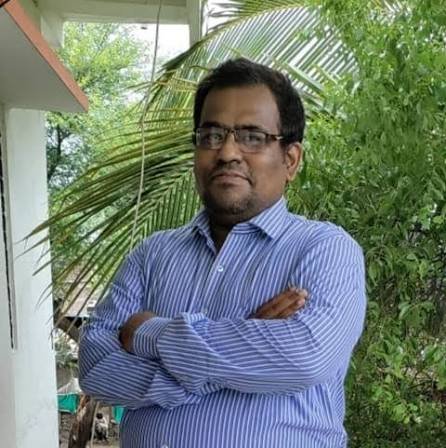
Written by Shrikant Bhosale
Final Year MBBS Student at Government Medical College, Chhatrapati Sambhajinagar (Aurangabad), Maharashtra. I write the study, ward and career guides I wish existed
when I started MBBS — grounded in the real NMC curriculum, real university exams and
real ward experience. More about me →
Educational use only. This guide is written for medical students and is not medical
advice. Clinical protocols, drug doses and guidelines change — always verify against the latest standard
textbooks and official NMC / institutional guidance before applying anything in practice.
Read the full disclaimer.